


Hey there! As a supplier of Road Safety Fence, I've seen firsthand how crucial these fences are in keeping our roads safe. So, let's dive into how road safety fences protect against vehicle collisions with guardrails.
The Basics of Road Safety Fences
First off, road safety fences aren't just random barriers put up along the roads. They're carefully designed structures made to absorb and redirect the energy from a vehicle collision. Think of them as a buffer zone between your car and whatever's on the other side, whether it's a steep embankment, a body of water, or oncoming traffic.
There are different types of road safety fences, each tailored to specific situations. For highways, Highway Road Fence is often used. These fences are built to withstand high - speed impacts. They're usually made of strong materials like steel or concrete, which can take a beating and still do their job.
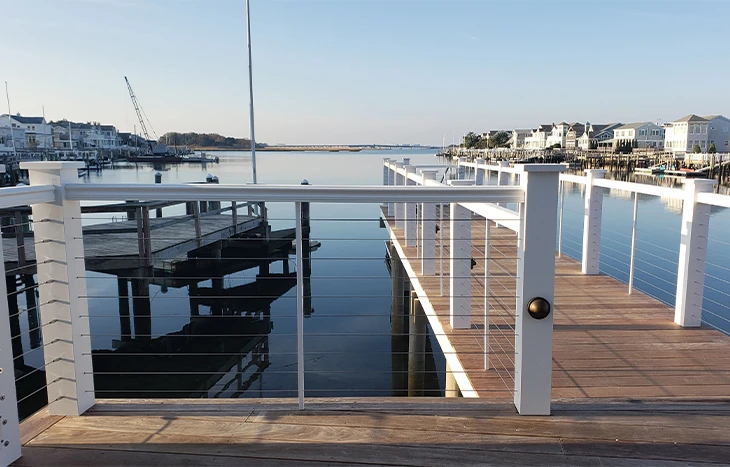
On the other hand, Dock Road Fencing is designed for areas around docks. These fences need to be durable and able to protect against vehicles that might be backing up or making sudden stops in a more confined space.
How They Absorb Impact
One of the key ways road safety fences protect against collisions is by absorbing the energy of the impact. When a vehicle hits a fence, the fence deforms. This deformation process is like a shock absorber. Instead of the vehicle coming to an abrupt stop, which can cause serious injuries to the passengers, the fence gradually slows down the vehicle.
Let's say you're driving on a highway, and for some reason, your car veers off the road and hits the fence. The fence will start to bend and stretch. This bending action takes time, and during that time, it's converting the kinetic energy of your moving vehicle into other forms of energy, like heat and sound. So, instead of all that energy being transferred directly to your body, it's being dissipated by the fence.
The materials used in road safety fences play a big role in this energy - absorption process. Steel fences, for example, are great at deforming in a controlled way. They can bend without breaking, which allows them to absorb a significant amount of energy. Concrete fences, on the other hand, are more rigid. They're better at redirecting the vehicle rather than absorbing the energy through deformation. But they still help in reducing the force of the impact.
Redirecting Vehicles
Another important function of road safety fences is to redirect vehicles. When a vehicle hits a fence at an angle, the fence is designed to guide the vehicle back onto the road in a safe manner. This is especially important on highways, where a vehicle going off the road can cause a chain - reaction of accidents.

The shape of the fence is crucial for redirection. Many road safety fences have a curved or angled design. When a vehicle hits this type of fence, the fence's shape helps to change the direction of the vehicle's movement. It's like a gentle nudge that steers the vehicle back towards the right path.
For example, if a car is skidding off the road and hits a curved fence, the fence will push the car in a direction that's parallel to the road. This reduces the chances of the car rolling over or colliding with other objects off the road.
Preventing Rollovers
Rollovers are one of the most dangerous types of vehicle accidents. Road safety fences can help prevent them. When a vehicle hits a fence, the fence provides a stable barrier that keeps the vehicle from tipping over.
The height and strength of the fence are important factors here. A tall and sturdy fence can stop a vehicle from climbing over it. This is especially important on roads with steep embankments. If a vehicle were to go over the edge of an embankment, it would likely roll over, which can be fatal. But a well - designed road safety fence can stop the vehicle before it reaches that point.
Maintenance and Durability
Of course, for road safety fences to do their job effectively, they need to be well - maintained. Regular inspections are necessary to check for any damage or wear and tear. If a fence is damaged, it might not be able to absorb the impact or redirect the vehicle as intended.
We, as a Road Safety Fence supplier, make sure that our fences are built to last. We use high - quality materials and advanced manufacturing techniques to ensure durability. But even the best - built fences need some TLC over time. That's why we also offer maintenance services to our customers.
The Importance of Proper Installation
Proper installation is just as important as the design and materials of the fence. A fence that's not installed correctly won't be able to perform its safety functions. It needs to be firmly anchored to the ground and aligned properly.
When we install our Road Safety Fence, we follow strict installation guidelines. Our team of experts makes sure that every fence is installed at the right height, angle, and with the proper spacing. This ensures that the fence will work as intended in the event of a collision.
Conclusion
In conclusion, road safety fences are a vital part of our transportation infrastructure. They protect us from the worst - case scenarios of vehicle collisions with guardrails by absorbing impact, redirecting vehicles, preventing rollovers, and more.
If you're in the market for road safety fences, whether it's Highway Road Fence for a busy highway or Dock Road Fencing for a dock area, we're here to help. We offer a wide range of high - quality road safety fences that are designed to meet your specific needs.
Contact us today to discuss your requirements and start the procurement process. We're looking forward to working with you to make our roads safer.
References
- Manual on Uniform Traffic Control Devices (MUTCD)
- American Association of State Highway and Transportation Officials (AASHTO) standards for road safety fences