


Are manual sliding gates easy to transport? That's a question I get asked a lot as a supplier of Manual Sliding Gates. Let's dig into this topic and see what the deal is.
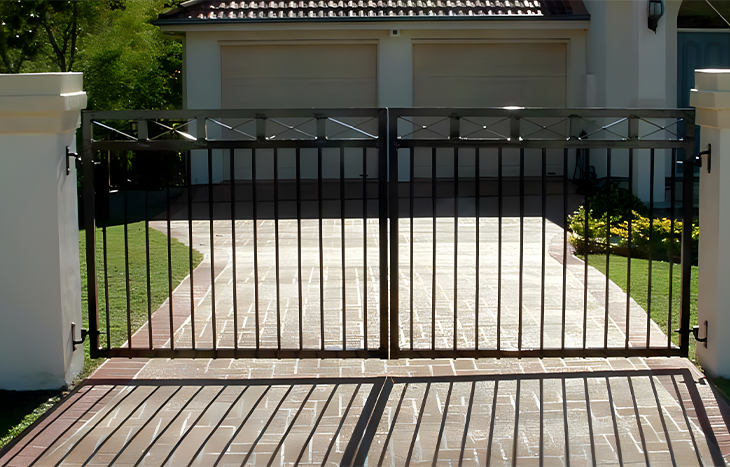
First off, let's talk about what manual sliding gates are. They're a type of gate that moves horizontally along a track. You'll often find them at driveways, commercial properties, and even residential areas. Compared to other types of gates, like swing gates, they take up less space in terms of the area they need to open and close. You can check out our Manual Sliding Gates for a better look at what I'm talking about.
Now, when it comes to transporting these gates, there are a few factors that come into play. The size and weight of the gate are the big ones. Manual sliding gates can vary in size quite a bit. Some are small, like the ones you'd use for a pedestrian entrance. You can check out our Manual Pedestrian Gates which are on the smaller side. These are usually easier to transport because they're lighter and more compact. You can probably fit a couple of them in a regular-sized van without too much trouble.
On the other hand, we have the Manual Driveway Gates. These are often larger and heavier. They need to be strong enough to secure a driveway, so they're built with more robust materials. Transporting these can be a bit more of a challenge. You might need a larger truck or even a specialized transport vehicle. The length of these gates can also be an issue. If they're too long, they might not fit in standard-sized vehicles, and you'll have to find a way to secure them properly to avoid damage during transit.
Another factor is the design of the gate. Some manual sliding gates come in one piece, while others are designed to be assembled on-site. One-piece gates are great because they're ready to install right away, but they can be a pain to transport. They're usually bulkier and harder to maneuver. Gates that are meant to be assembled on-site are a bit more flexible. You can break them down into smaller parts, which makes them easier to load, unload, and transport. However, you need to make sure that all the parts are properly labeled and packed to avoid any confusion during assembly.
The distance of the transport also matters. If you're just moving the gate a short distance, say within the same city, it might not be too bad. You can plan the route carefully, and as long as you have the right vehicle, you should be able to get it there without too many problems. But if you're transporting the gate across the country or even internationally, things get a lot more complicated. You have to deal with different regulations, customs, and longer transit times. There's also a higher risk of damage during a long journey.
Let's talk about packaging. Proper packaging is crucial for transporting manual sliding gates. We use high-quality materials to protect the gates during transit. For example, we wrap the gates in bubble wrap or foam to prevent scratches and dents. We also use sturdy boxes or crates to keep the parts together and protect them from impact. If the gate is being shipped overseas, we make sure it's packed to withstand the rigors of long-distance travel and different weather conditions.
When it comes to loading and unloading the gates, it's important to have the right equipment. For smaller gates, you might be able to get away with using a hand truck or a pallet jack. But for larger gates, you'll need a forklift or a crane. These tools make it easier to lift and move the gates safely. You also need to have a team of experienced workers who know how to handle the gates properly. Improper loading and unloading can lead to damage, which is not only costly but also delays the installation process.
In terms of cost, transporting manual sliding gates can vary widely. It depends on the factors we've already discussed, like size, weight, distance, and the type of transport vehicle needed. For short-distance transports, the cost might not be too high. But for long-distance or international shipments, the cost can add up quickly. You have to factor in things like fuel, tolls, customs fees, and insurance.
So, are manual sliding gates easy to transport? Well, it really depends. Smaller, pre-assembled gates are generally easier to transport, while larger, one-piece gates can be a challenge. But with proper planning, the right equipment, and high-quality packaging, we can make the transport process as smooth as possible.
If you're in the market for manual sliding gates and have questions about transport or anything else, don't hesitate to reach out. We're here to help you every step of the way, from choosing the right gate to getting it safely to your location. Let's have a chat and see how we can meet your needs.

References
- General knowledge about manual sliding gates and transport logistics in the industry.