


As a seasoned stair handrail supplier, I often encounter customers with various questions regarding the installation, maintenance, and modification of stair handrails. One question that comes up quite frequently is, "Can a stair handrail be removed and reinstalled?" In this blog post, I'll delve into this topic in detail, exploring the feasibility, process, considerations, and more.

Feasibility of Removing and Reinstalling a Stair Handrail
The short answer is yes, a stair handrail can generally be removed and reinstalled. However, the feasibility depends on several factors, including the type of handrail, the installation method, and the condition of the handrail and the staircase itself.

Types of Handrails
- Wooden Handrails: Wooden handrails are relatively easy to remove and reinstall, especially if they are attached using screws or bolts. The wood can be carefully detached without causing significant damage, and reinstallation can be straightforward as long as the mounting points are still intact.
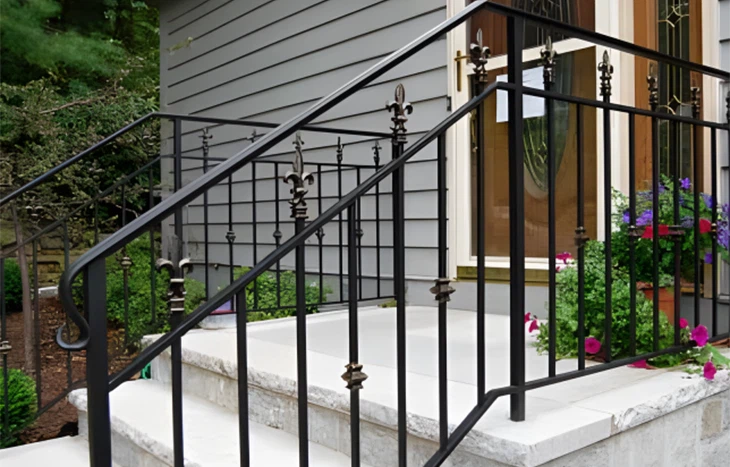
- Metal Handrails: Metal handrails, such as Steel Handrail Outdoor and Metal Stair Handrail Indoor, can also be removed and reinstalled. Welded metal handrails may require more effort as they need to be cut and then rewelded during reinstallation. Bolted or screwed metal handrails are easier to handle, similar to wooden ones.
- Glass Handrails: Glass handrails are more delicate and require special care during removal and reinstallation. The glass panels need to be carefully detached to avoid breakage, and the mounting hardware must be in good condition for proper reinstallation.
Installation Methods
- Surface - Mounted Handrails: These are attached to the surface of the staircase using screws or brackets. They are relatively easy to remove by simply unscrewing the fasteners. Reinstallation is also straightforward, as long as the surface is in good condition and the mounting holes align.
- Flush - Mounted Handrails: Flush - mounted handrails are installed flush with the staircase, which may require more work to remove. The surrounding materials may need to be carefully cut or removed to access the mounting hardware. Reinstallation may also be more complex, as it requires precise alignment and potentially some patching of the surrounding area.
The Process of Removing and Reinstalling a Stair Handrail
Removal
- Inspection: Before starting the removal process, carefully inspect the handrail and the mounting hardware. Look for any signs of damage, corrosion, or loose parts. This will help you determine the best approach for removal and identify any potential issues during reinstallation.
- Gather Tools: You'll need a set of appropriate tools, such as screwdrivers, wrenches, pliers, and possibly a saw or grinder for welded handrails. Make sure the tools are in good condition and suitable for the type of handrail you're working with.
- Remove Fasteners: For screw - or bolt - attached handrails, simply use the appropriate tool to remove the fasteners. If the handrail is welded, you'll need to carefully cut the welds using a saw or grinder. Take your time to avoid damaging the handrail or the staircase.
- Detach the Handrail: Once the fasteners are removed, gently detach the handrail from the staircase. If there are any brackets or additional components, remove them as well.
Reinstallation
- Prepare the Handrail and Staircase: Clean the handrail and the mounting points on the staircase to remove any dirt, debris, or old adhesive. If there are any damaged parts, repair or replace them before reinstallation.
- Position the Handrail: Carefully position the handrail back on the staircase, aligning it with the mounting points. Make sure it is level and straight.
- Attach the Handrail: If the handrail is attached using screws or bolts, insert the fasteners and tighten them securely. For welded handrails, have a professional welder re - weld the joints.
- Test the Handrail: Once the handrail is reinstalled, test it to ensure it is stable and secure. Apply some pressure to different parts of the handrail to check for any movement or looseness.
Considerations Before Removing and Reinstalling a Stair Handrail
Safety Regulations
- Different regions have specific safety regulations regarding stair handrails. Before removing and reinstalling a handrail, make sure you are familiar with these regulations. The handrail must meet the required height, strength, and installation standards to ensure the safety of users.
- In some cases, you may need to obtain a permit for the removal and reinstallation of a handrail, especially if it involves structural changes to the staircase.
Structural Integrity
- Removing and reinstalling a handrail can potentially affect the structural integrity of the staircase. If the handrail was originally installed to provide additional support to the staircase, removing it without proper reinforcement may weaken the structure.
- Before starting the process, consult a structural engineer or a professional contractor to assess the impact on the staircase's structure.
Aesthetics
- Reinstalling a handrail may change the appearance of the staircase. Make sure the reinstalled handrail matches the overall aesthetic of the space. If necessary, you may need to refinish or paint the handrail to blend in with the surroundings.
Benefits of Removing and Reinstalling a Stair Handrail
Repair and Maintenance
- If the handrail is damaged or worn out, removing and reinstalling it allows you to repair or replace the damaged parts. This can extend the lifespan of the handrail and improve its functionality.
- You can also take this opportunity to clean and maintain the handrail, ensuring it remains in good condition for years to come.
Renovation and Upgrades
- Removing and reinstalling a handrail can be part of a larger renovation project. You may want to upgrade to a different type of handrail, such as a more modern or stylish design, to enhance the look of the staircase.
- It also gives you the chance to change the finish or color of the handrail to match the new decor of the space.
Conclusion
In conclusion, a stair handrail can be removed and reinstalled, but it requires careful planning, proper tools, and adherence to safety regulations. Whether you're looking to repair a damaged handrail, upgrade its appearance, or make changes to the staircase, the process can be successfully completed with the right approach.
If you're considering removing and reinstalling a stair handrail or are in the market for a new handrail, I encourage you to reach out to us. As a trusted stair handrail supplier, we have the expertise and a wide range of high - quality handrails to meet your needs. Contact us to discuss your project and start the procurement process today.
References
- Building Codes and Standards: Various local and national building codes that govern the installation and safety of stair handrails.
- Handrail Manufacturer Guidelines: Guidelines provided by handrail manufacturers regarding the installation, removal, and maintenance of their products.